2018 / Peru / Tuenti (Telefónica)
Cutting customer service costs through an active community
My role
CX Designer (with cross-functional project leadership)
My contribution
Strategic design
Project management
Cross-functional facilitation
Impact analysis
Overview
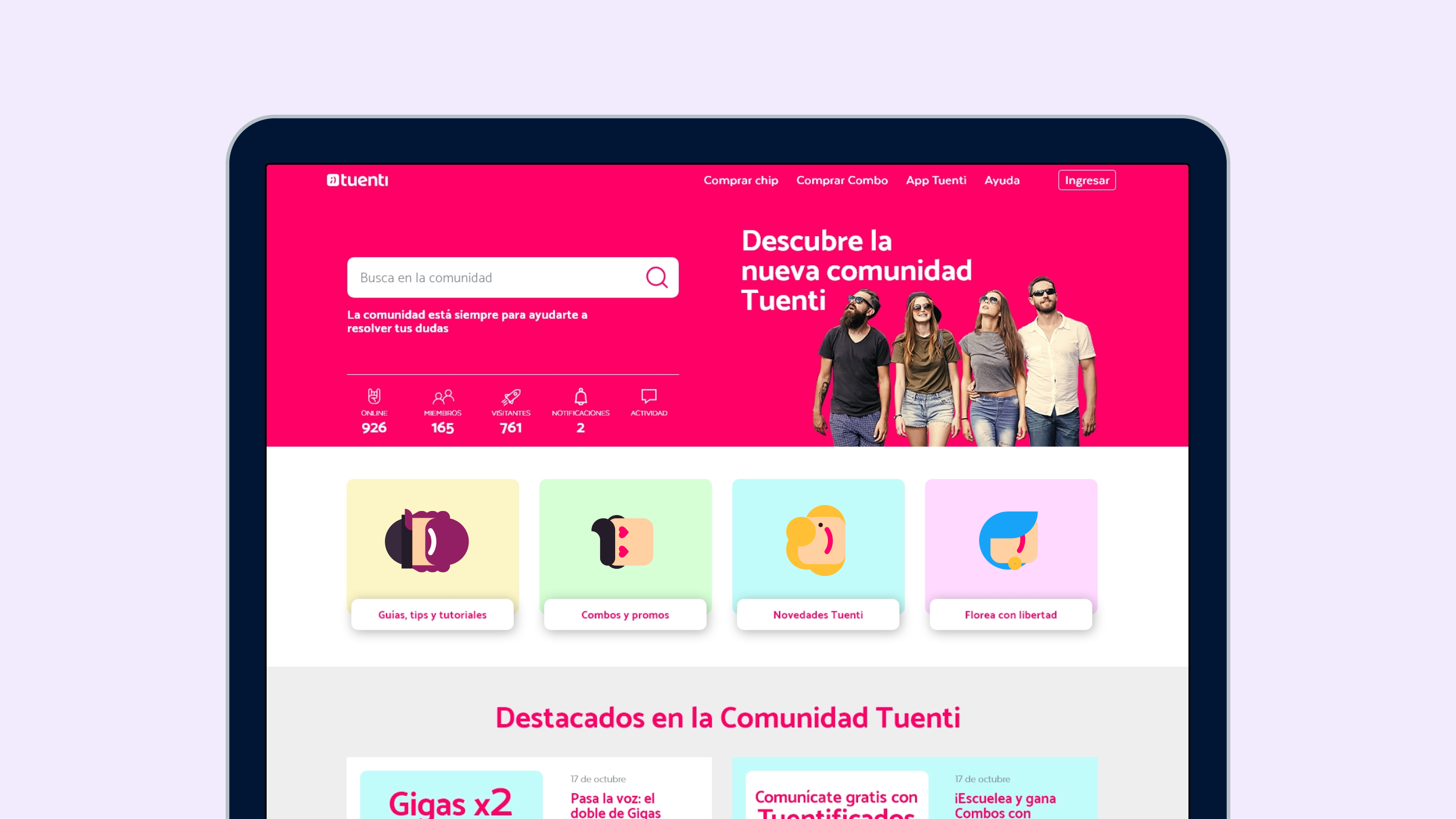
I led the strategic design of Comunidad Tuenti, which reduced 8% of simple calls to the contact center by channeling them into a space users managed themselves.
The forum didn’t just create operational efficiency: it laid the groundwork for a new customer relationship strategy, putting customers at the center of the brand’s digital ecosystem.
My main challenge was aligning conflicting visions and constraints (marketing, legal, finance) to build a gamified participation model that was viable, sustainable and on-brand within the sector’s regulations.
Problem space
An expensive, passive and unscalable service model
Tuenti Peru faced steady growth in calls for simple queries, which created:
Unnecessary operating costs
A saturated phone channel
A slow, frustrating experience for customers
Based on pilots in other countries, the global team proposed exploring a digital community as an alternative.
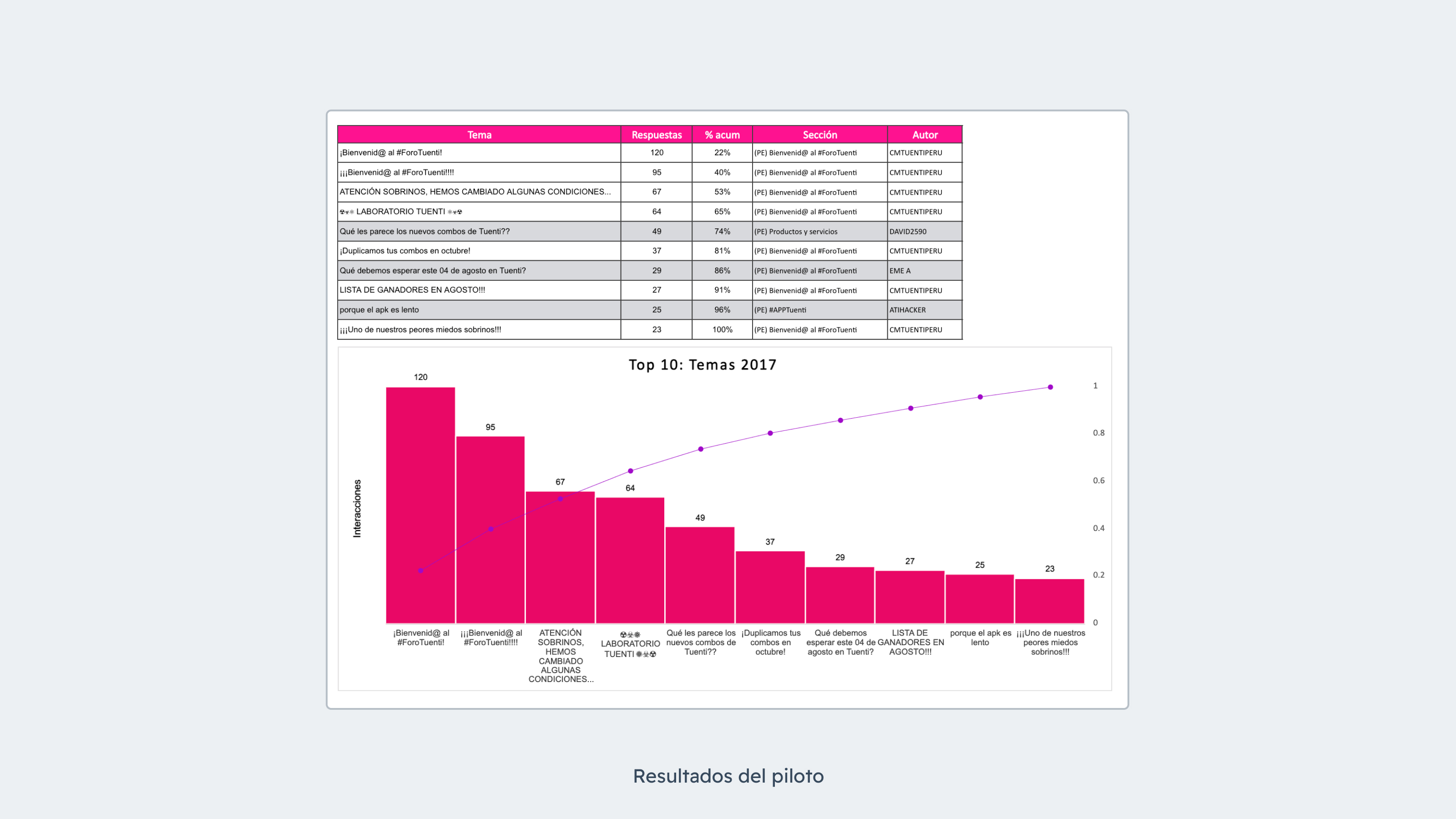
Landing a global idea in the local context, with data
My challenge was to translate that idea into a viable, strategic local solution, weighing financial impact, legal constraints and users’ real motivations.
I led:
01
Prioritizing high-volume, low-risk topics
I analyzed 6 months of call center data to identify which categories could be resolved within a community without compromising quality or regulatory compliance.
02
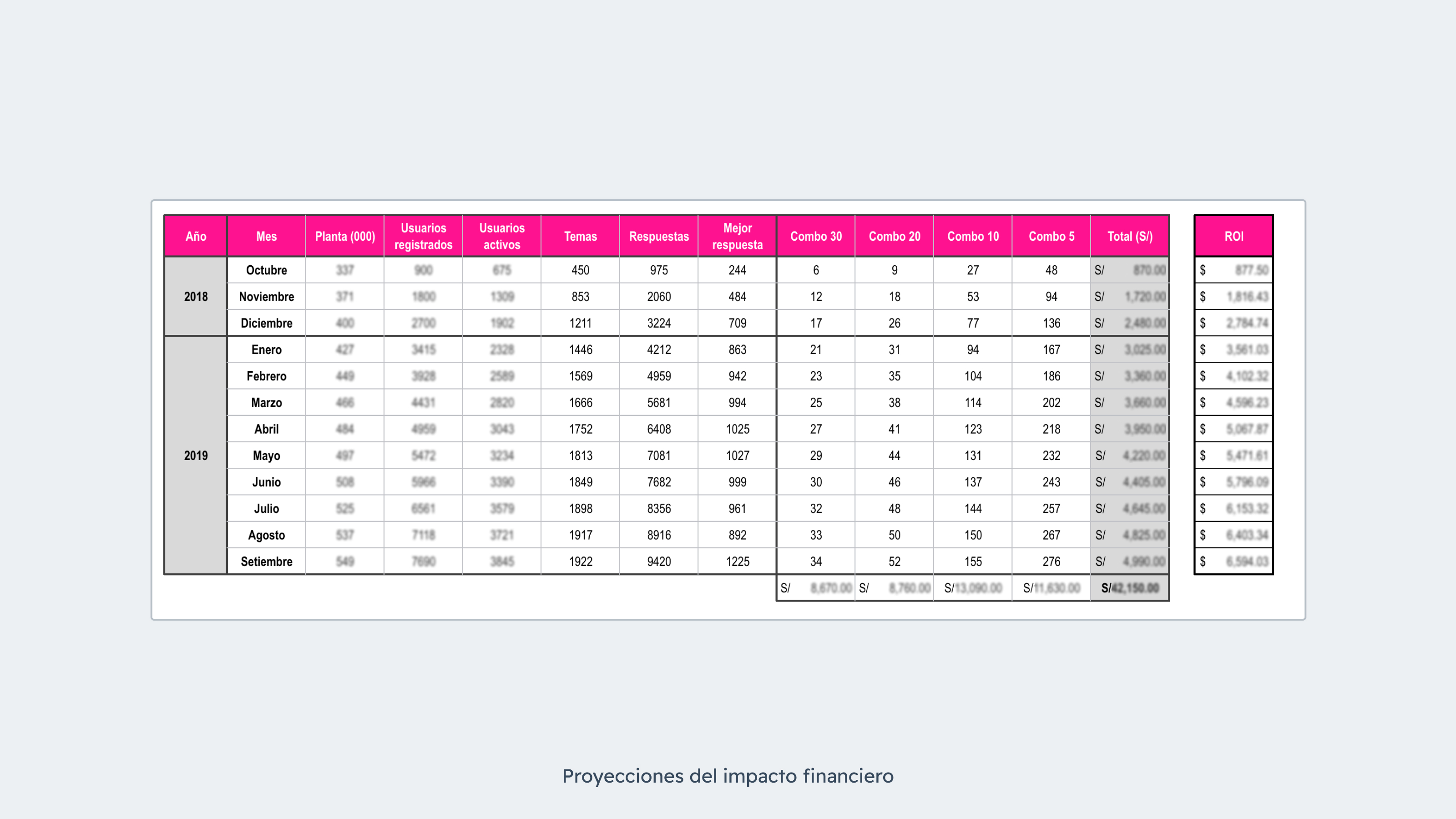
Defining KPIs and a savings model
We projected the financial impact based on prior pilots, estimating adoption, participation and expected savings. This estimate was key to getting executive approval.
03
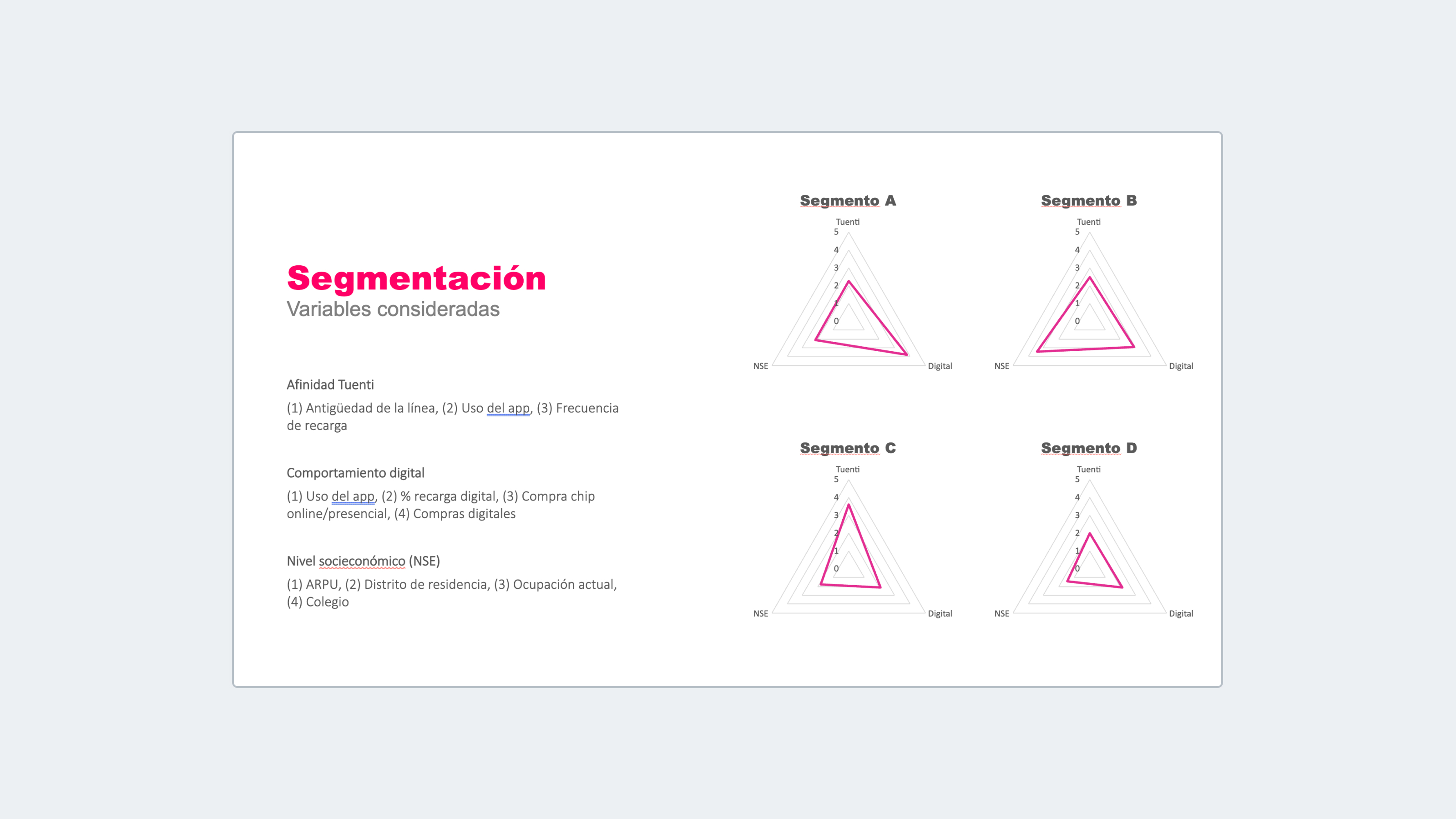
Segmenting profiles and motivators
I designed a survey and ran interviews that let us distinguish 4 user profiles combining age, digital affinity and brand attachment.
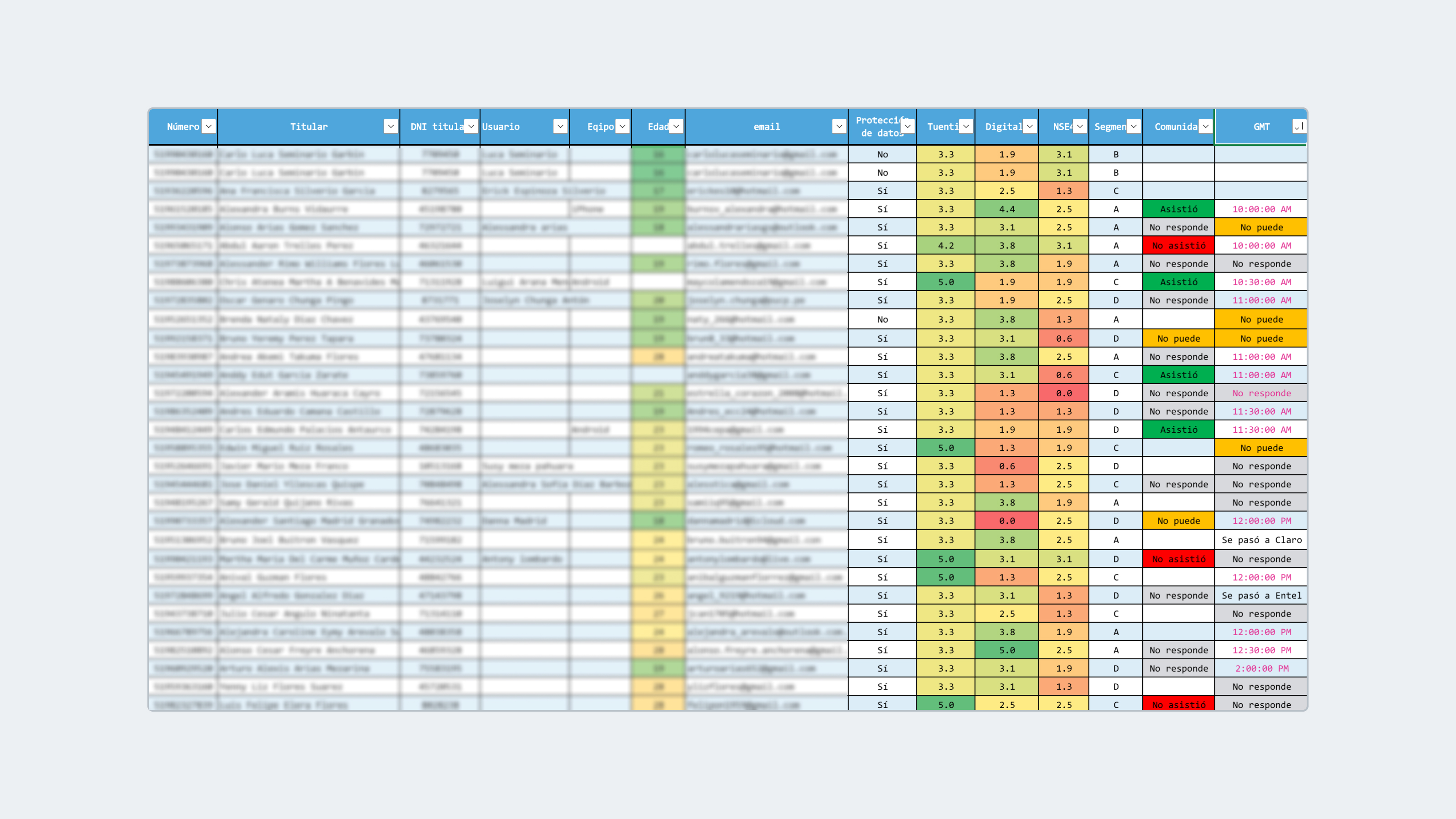
The research revealed users’ real motivations
I interviewed 12 customers (3 per profile) and uncovered 2 main motivators:
The desire for social recognition for mastering the product.
The need to help others and feel part of a community.
This information helped us fine-tune the rewards program and better define the forum’s launch strategy.
These were the first sessions of a customer panel that let us create spaces for collaboration and track the brand’s evolution over time.
Solution space
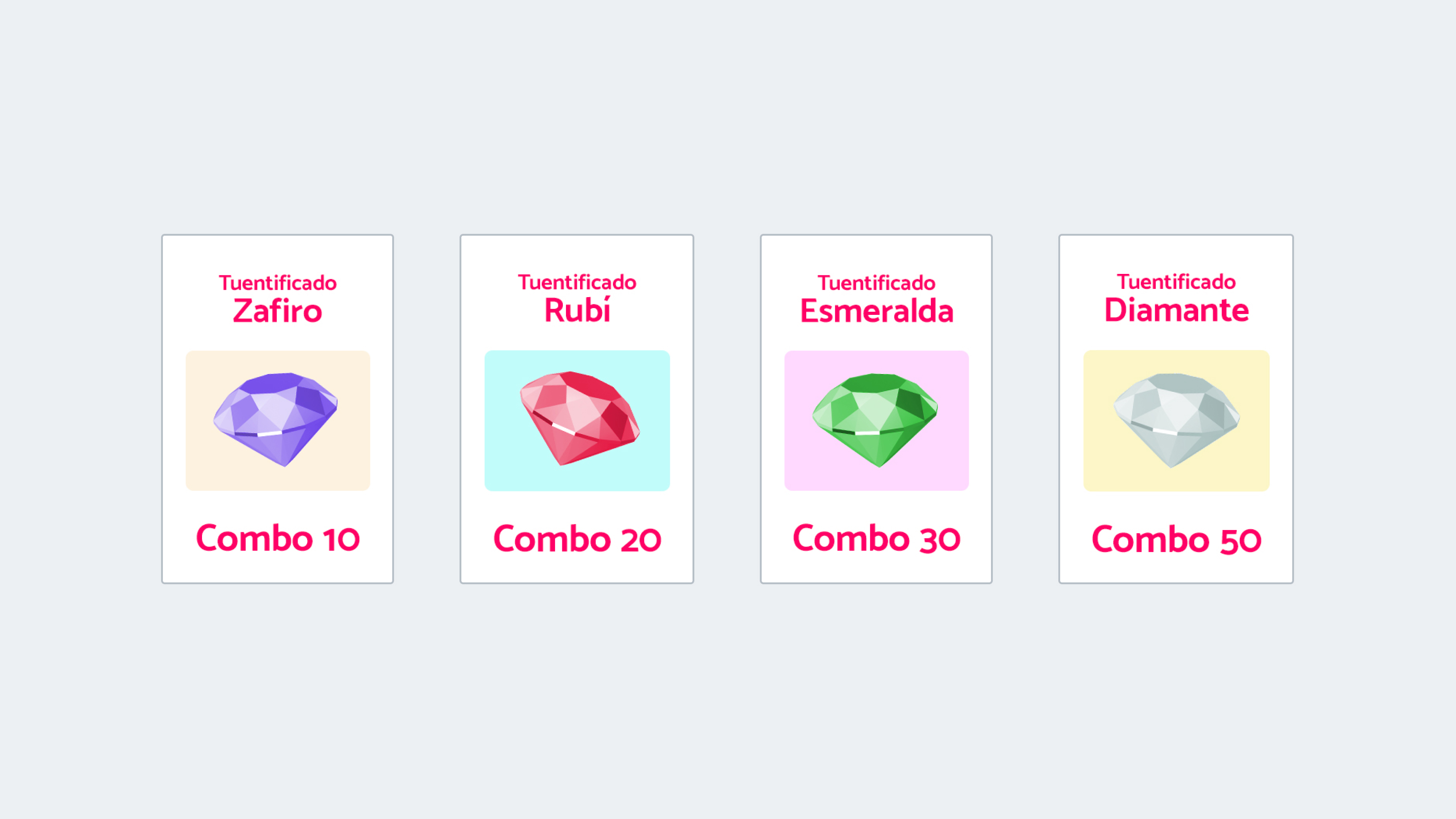
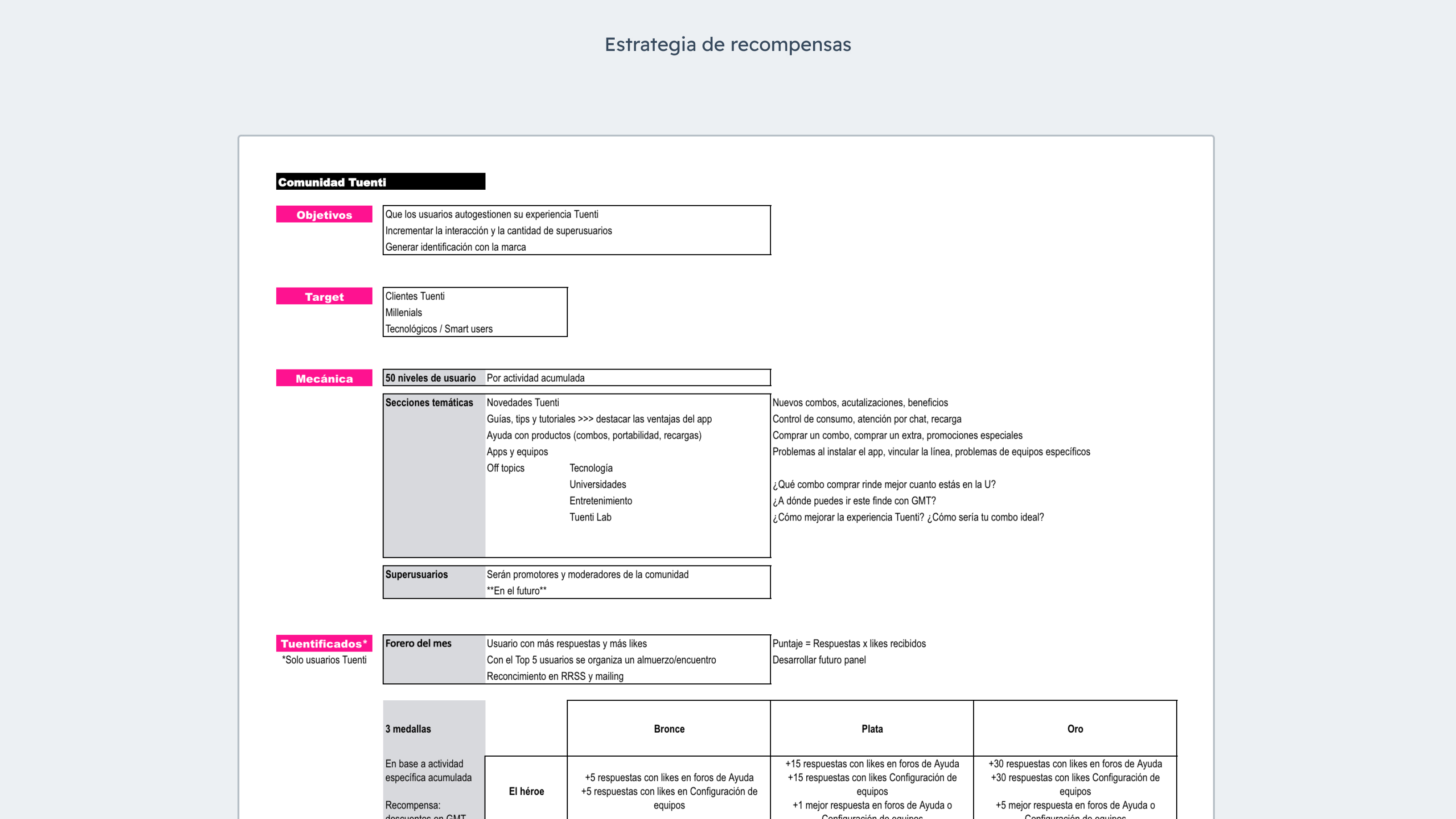
Designing a gamification system in a regulated industry
I designed a tiered participation system that rewarded different levels of contribution: posting in subforums, answering questions, getting upvotes and more; and guided its implementation together with the marketing team.
The most tense moment came when legal flagged that we couldn’t simply hand out products (like data packages or plans) as rewards: the regulator (Osiptel) could interpret that as a disguised rate change. I worked closely with the lawyers to structure the incentive system’s terms within the regulatory framework without losing the motivational effect we were after.
Key moment
I redesigned the incentive system together with legal so it would comply with regulation without losing its motivational effect.
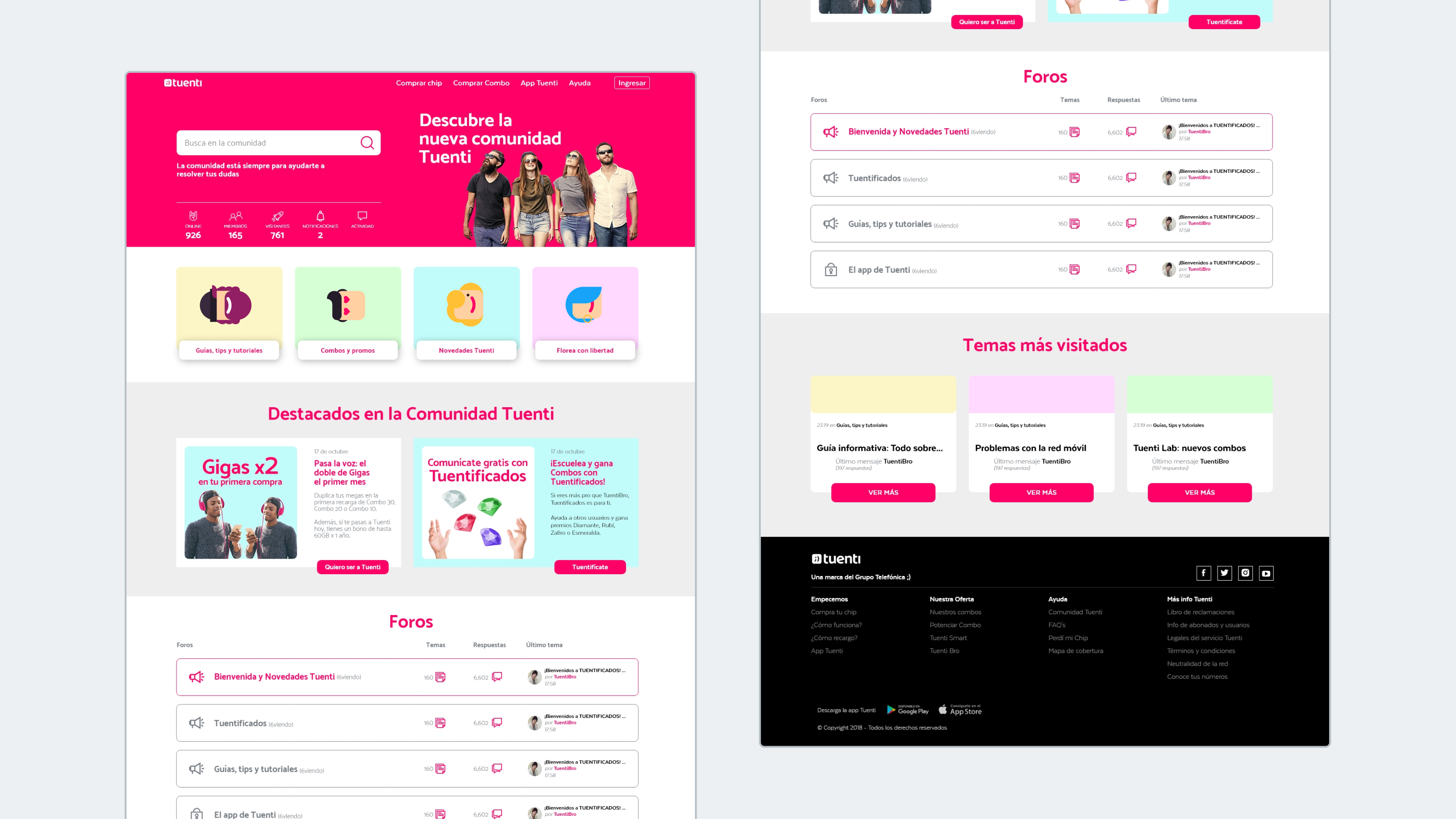
Community architecture built around real usage
I defined the forum’s structure and led its implementation with the external vendor and Telefónica’s digital team. I classified content by frequent topics (SIM setup, plans, app usage, etc.) to steer participation toward where it would have the greatest impact.
We identified the most active users from the pilot and brought them in as moderators and influencers for the space.
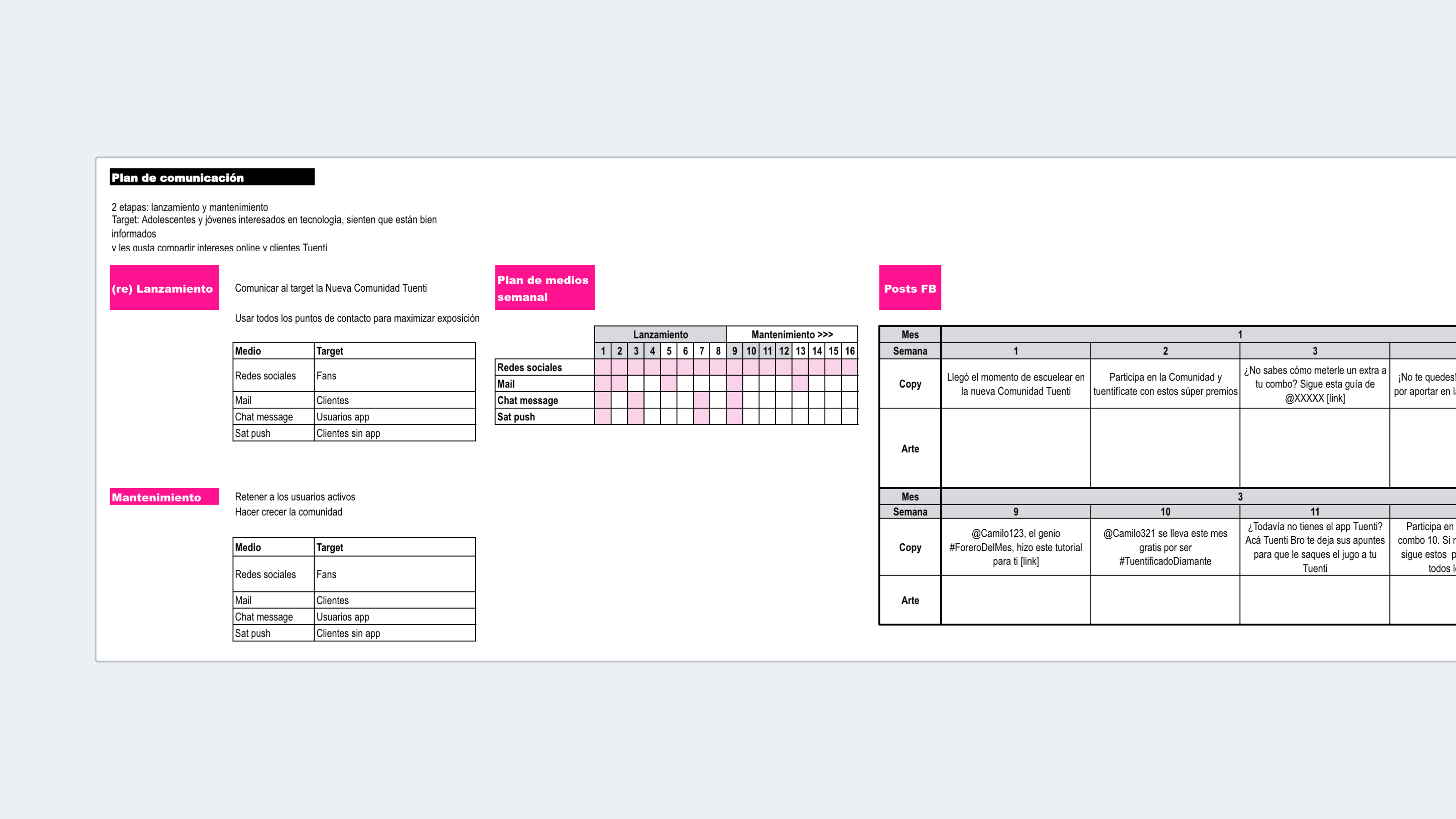
Bringing the forum to every touchpoint
I designed the strategy to weave the forum into the customer journey and coordinated its rollout with the marketing team:
Added the forum to welcome messages for new customers
Trained the contact center to route suitable cases to the forum
Ran A/B experiments to improve sign-up and participation rates
Segmented communications across social media, WhatsApp and email
Impact and results
In the first 3 months:
2.4%
of customers signed up for the forum in the first 3 months
35%
of them actively participated with comments or posts
58%
of the questions posted were resolved by the community
-8%
fewer simple calls to the contact center
An impact beyond calls avoided
Beyond efficiency, this project drove a deeper transformation:
Redefined the customer's role
The customer panel we built during the research became permanent: we turned it into a space to co-create improvements and explore ongoing listening.
Proved that efficiency can be built from experience
We projected the digital channel's financial impact based on historical data and results from the pilots in Peru and Argentina. This was key to getting the project approved.
Connected traditionally siloed areas
CX, legal, finance and marketing aligned around a shared goal, brought together by design.
Key learning
Leading isn’t about having the best idea. It’s about building the conditions for a good idea to happen: aligning divergent views, translating constraints into opportunities and articulating a strategy that cuts across the whole organization.