2021 / Colombia / Wait ‘n Rest
Self-service to reduce staffing needs in temporary lodging
My role
Service & UX designer
My contribution
Strategic facilitation
Service design
UX design
Overview
Wait ’n Rest wanted to validate a new fully autonomous airport lodging model.
My role was to lead the design of the service and the digital experience to achieve a staff-free operation while keeping high levels of trust, clarity and efficiency.
The pilot at El Dorado Airport delivered strong results: 75% of users completed their stay without assistance and the service was run by just 2 people.
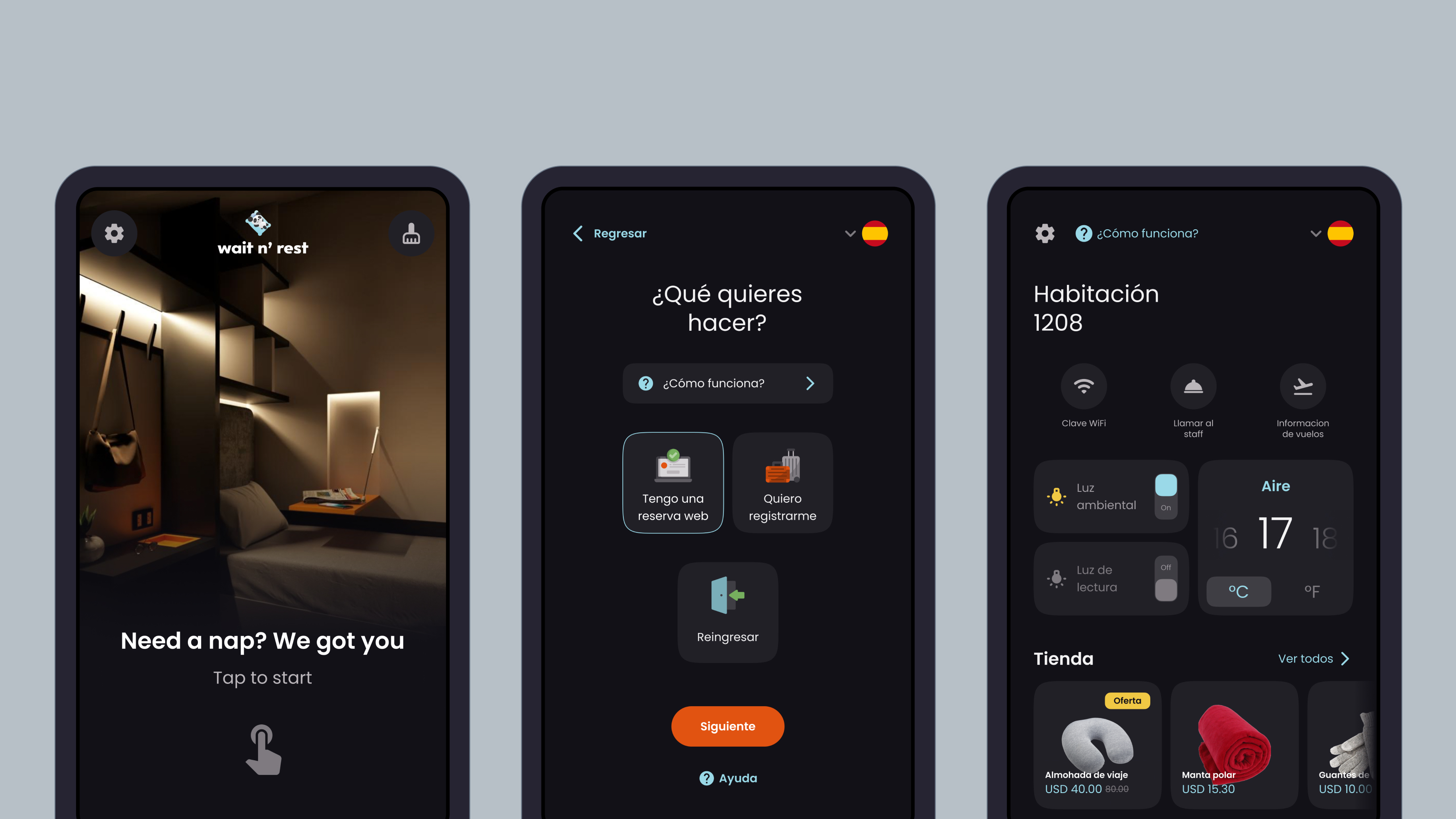
Problem space
Reinventing unstaffed lodging
Wait ’n Rest offers private rest pods in airports for people with long layovers. Its promise: comfortable, secure rest without leaving the airport or depending on staff.
But its proposition carried a structural tension: to be profitable, the service had to run without human assistance. In other words, it had to be fully autonomous, yet trustworthy from the very first use.
Central challenge
How do you build trust in a staff-free service, in one of the most stressful and vulnerable contexts there is — an airport?

What the airport wasn’t making travelers feel
I started from 8 interviews conducted by the team, which I then deepened with behavioral analysis, interaction flow mapping and friction-point mapping.
Despite cultural or age differences, I identified shared needs:
Immediate rest
No one wants to solve a puzzle when all they want is to sleep
Perceived control
Feeling like they can go to the bathroom, close the door and know no one will come in
Support within reach
Knowing that if something goes wrong, help is nearby without breaking the self-service experience
This reading was key to reorienting design decisions that, until then, had been driven more by technical constraints than by human needs.
Solution space
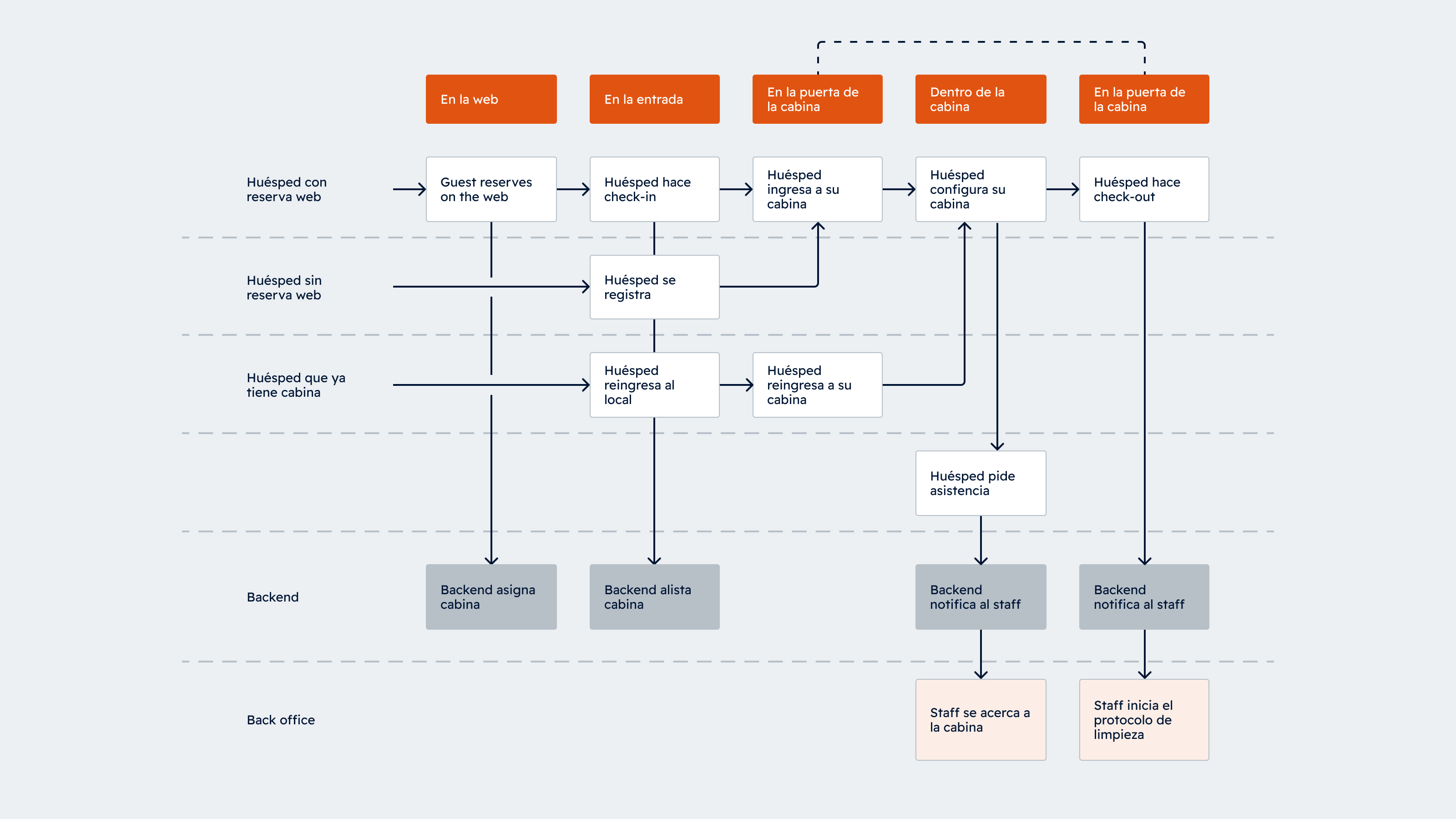
Designing a service people could trust
I facilitated collaborative sessions with business, architecture and technology to identify every critical point in the journey, map usage scenarios and anticipate points of failure.
This made it possible to design a hybrid system: highly autonomous, but with well-defined support protocols.
I designed a guided phygital experience with 3 main interaction points:
Screen at the facility entrance
Check-in, booking, coupon validation and re-entry
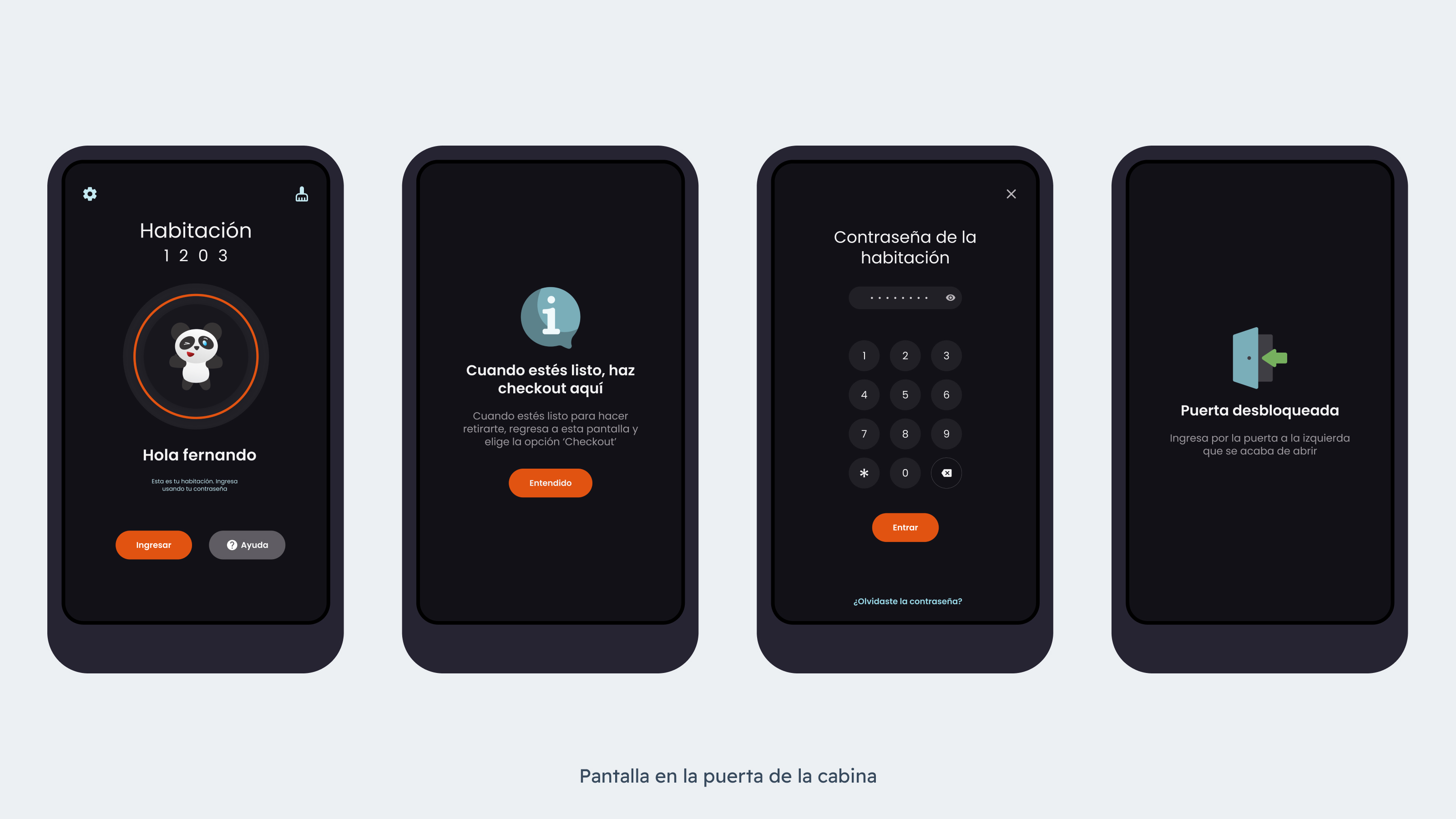
Screen at the pod door
Check-out and access control
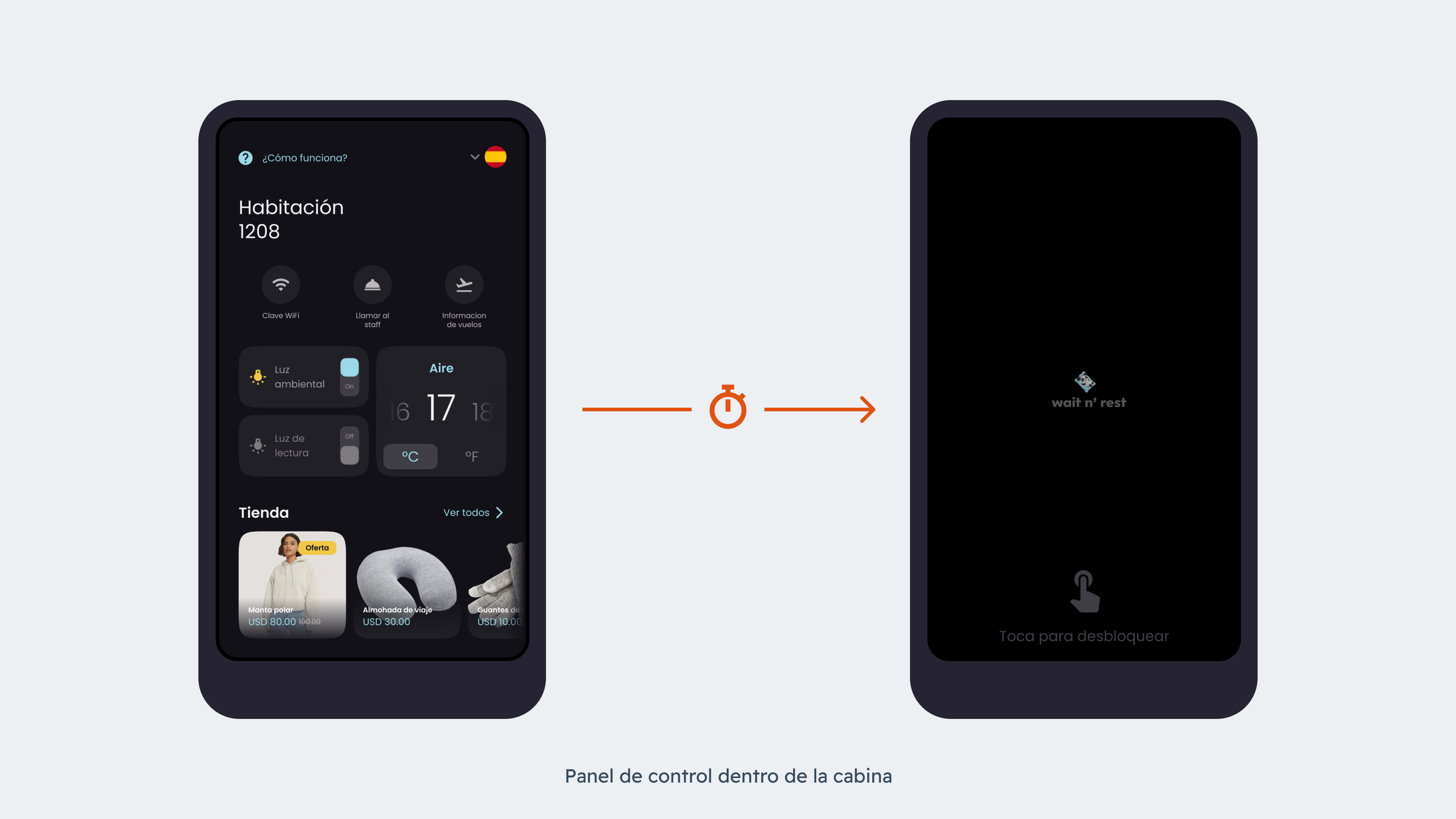
Screen inside the pod
Light and ventilation control, flight information and access to a virtual store
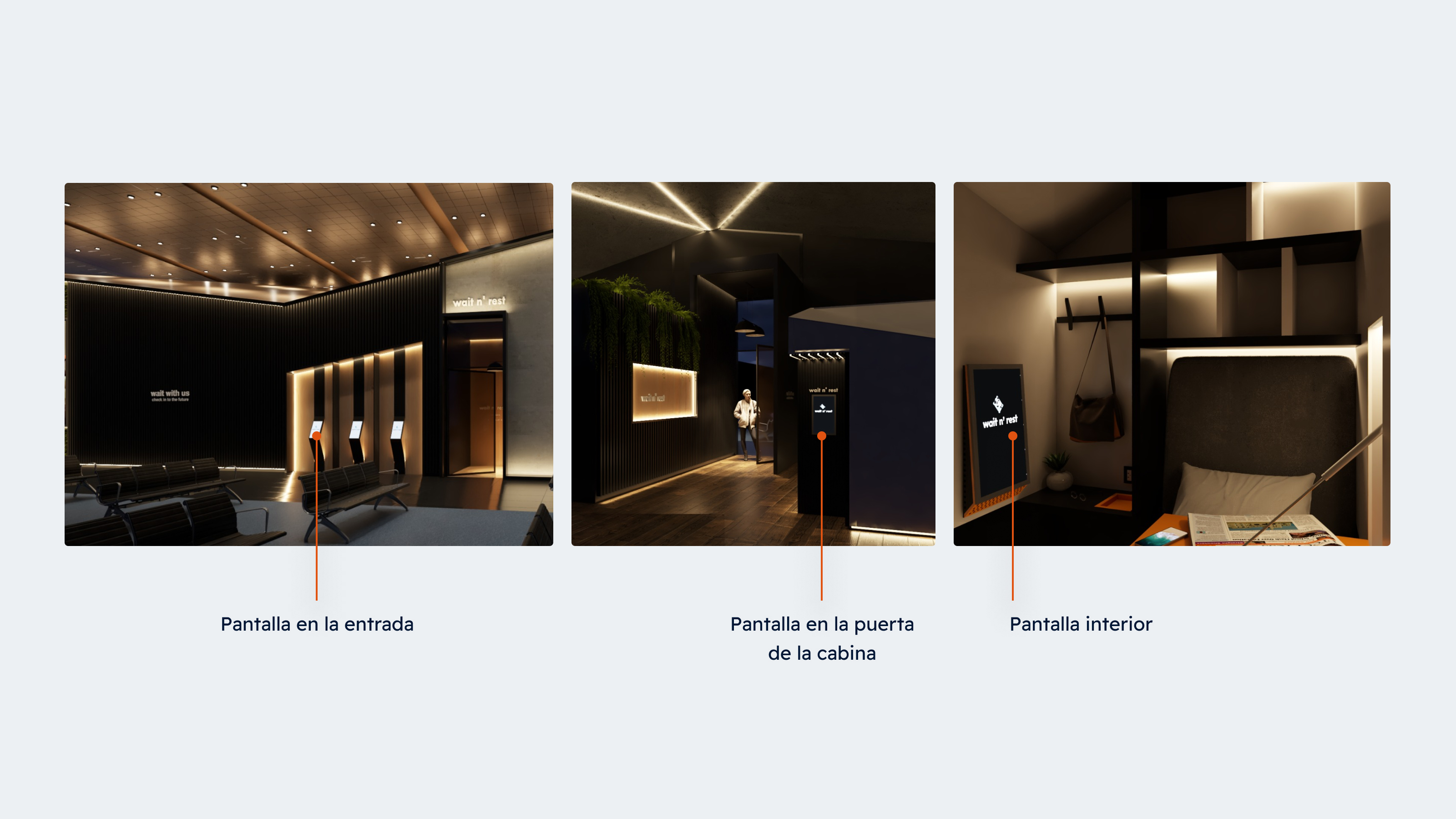
Three screens, one narrative of trust
For each interface, I designed flows with a guided narrative using educational messages that prepared users before each critical action.
Beyond the visible design, I also identified the scenarios where users would still need human help.
Working on this phygital experience pushed me to think beyond hand-to-screen interactions.
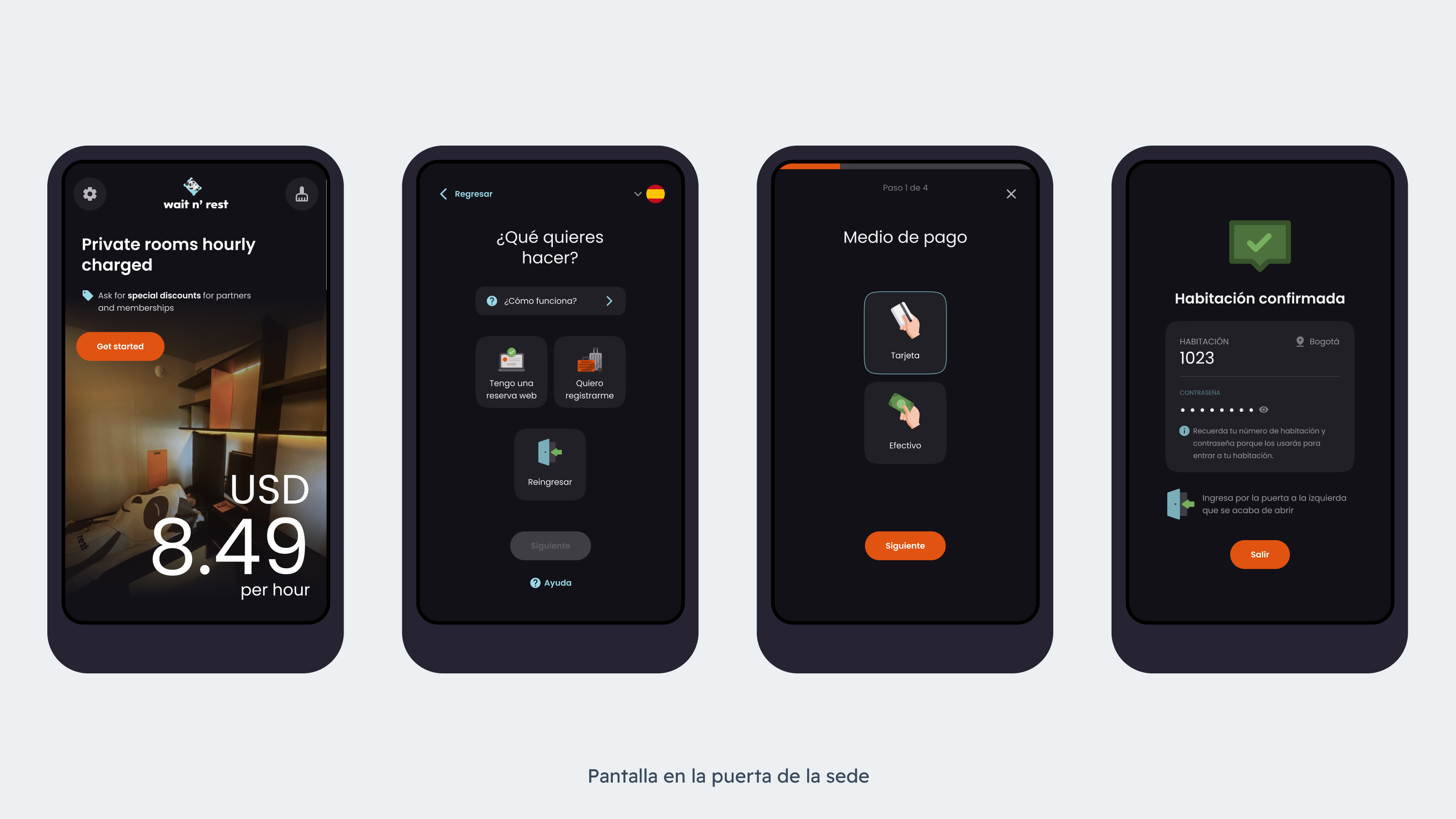
Guiding users without humans
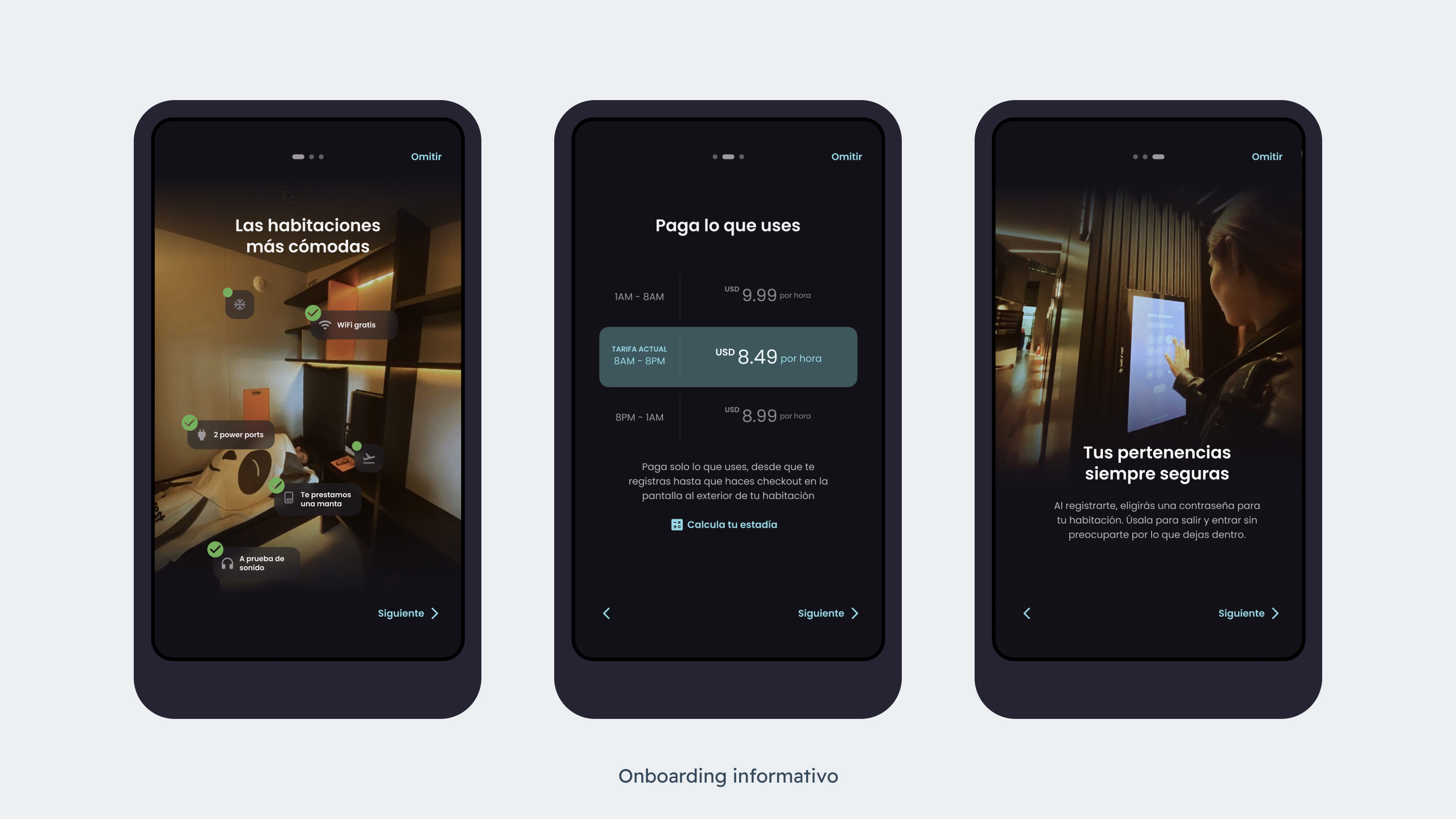
A key challenge was explaining to users how the service worked before booking and throughout their stay.
To solve this, I proposed adding instructional messages before each critical action to improve trust and reduce errors.
‘Frictionless’ was the wrong answer
Business asked for “a frictionless interface,” everything done in one click. But I found that, in contexts of fatigue and distrust, a lack of information creates more uncertainty, not less.
I made the case that designing for trust doesn’t mean stripping away information — it means anticipating doubts.
That decision significantly reduced errors in the journey and the need for assistance.
Impact and results
The pilot ran at El Dorado Airport. In the first operating cycle:
+75%
of users completed their stay without needing assistance
2 employees
were enough to operate and maintain 20 pods
The service was perceived as safe, clear and trustworthy according to customer surveys
What I learned
Designing services without people isn’t just about “automating”: it’s about redesigning the way people trust.
This project strengthened my ability to orchestrate decisions across business, architecture and design, always thinking in systems.
Key takeaway
True self-service isn’t about making users do everything on their own — it’s about making them feel they could do it all on their own, without anxiety or doubt.